personally – the biography

Maximo Simon loves swimming in the city’s wild and pure river where he grew up. He is a Swiss artist with interests to landscape architecture In the past he worked with and within the nature and learned a professional occupation with a degree. Maximo has always dealt with natural themes and, as an artist, he creates still artworks that be on mind with natural systems. He’s motto “our nature, our fortune” is deeply rooted in his understanding of how humans have to interact and behave with nature. Maximo is fascinated by the shapes and colors of the nature. But also, from the natural arrangement of plants in the forest. The impermanence and patina of nature is carried with dignity and shows imperfection in life. Maximo is guided by these approaches and uses this inspiration to develop different series such as “Oceangrounds”, “Nature Colors” and “Desert of …”

career – artistic approach 

Maximo Simon likes the different haptic and sensual feelings of the materials and brings them together. He tries to combine subtle color nuances in his work and he likes to work in a reduced way and selects material and color in a targeted manner. It is important to him that textures and colors mesh cleanly. As a result, his artworks are reduced and delicate. His artwork are also inspired by the Japanese motto of “Wabi-Sabi”. It signifies the love for the imperfection, impermanence and irregularity of nature. He uses mostly canvas and creates different series with different themes of nature. Often in coherences with natural elements like fire, water, desert and ice. Also, are the series colored themed and often theme based of one inspiration. For this, he uses acrylic, pigments, spray paint, sand, mortar, fluids and other supplies. 

the content of artworks – our nature, our fortune 

the Japanese Wabi means to enjoy lonely stillness and austerity. The Japanese Sabi means to show maturity and patina. These two components combine into a mindful concept that inspires me. In the end, it’s all about sheer simplicity. For example I find a clay bowl that has an imprecise, non-round shape incredibly beautiful.

My works address the changes and fascination of nature and relate to environmental awareness. I pursue environmentally conscious approaches such as the series “Fire” and “Australian Desert Ground”, which refers to the drying up of the earth and the signal of bush fires. For me, nature has its own body language. Structures in my works are important to me. These show the fragility, but also the strength of life and the diversity of nature.

The “Oceangrounds” considering to the beauty of water and the possibility to dive deep into a world of silence. The series “Solitudes” shows the fragility of icebergs on a clean ocean surface and the iceberg is created in three-dimensional ways.

the outcome 

Maximo Simon has exhibited in New York City, Venice, Bern, Parma, Munich, Lausanne, Strasbourg and Zurich. His works has been seen in an hong art museum in Chongijing/ China in from July to Octobre 2022. Maximo was also represented different international art fairs. He received his last commission from Five Global Holding from Dubai, where Maximo Simon has implementing an art commission for the 5-star luxury hotel Five Zürich. In January 2021 he was voted “Artist of the Month” by It’s Liquid Group from Venice/ Italy. His collectors are based in Switzerland, United Kingdom, USA and Germany.

Maximo Simon has exhibited in New York City, Venice, Bern, Parma, Forli, Munich and Zurich. His works can also be seen in an art museum in Chongijing/ China in summer/autumn 2022. He is also represented at art fairs, including the International Art Fair Lausanne. He received his last commission from Five Global Holding from Dubai, where Maximo Simon is implementing an art commission for a planned 5***** luxury hotel in Zurich. In January 2021 he was voted “Artist of the Month” by It’s Liquid Group. Maximo Simon Walther is a contemporary, modern designer and painter. He’s artworks are related to nature with the slogan “our nature, is our fortune”. He takes commissions and works for hotels. His artworks are in international collections and museums. Maximo Simon Walther artworks fit perfectly to hotels, offices and private collections. Maximo Simon Walther is based in Bern, Switzerland and works worldwide. His clients are in the United States of America (USA), United Kingdom, Scotland, Germany and Switzerland. Maximo Simon Walther works as an artist in contemporary art, modern art, expressionism, abstract art and connects nature themes and topics with art. He has exhibited in New York, Munich, Hamburg, China, Parma, Lausanne, Zürich, Bern, Montichiari, Genova in solo exhibitions, group exhibitions on art fairs and international art galleries. His art is in private collections, museums, art fairs and hotels. He takes commission from hotels and restaurants. His contemporary artworks fit perfectly to hotels, hotel rooms, check-in areas and restaurants. He has galleries in Paris, Arles, Venice and Padova. He works for galleries in London, New York and Singapore. His art is in Paris, Milano and Basel.

Maximo Simon Walther

– painter of contemporary art

- our nature, our fortune -

the balance of a forest in a city

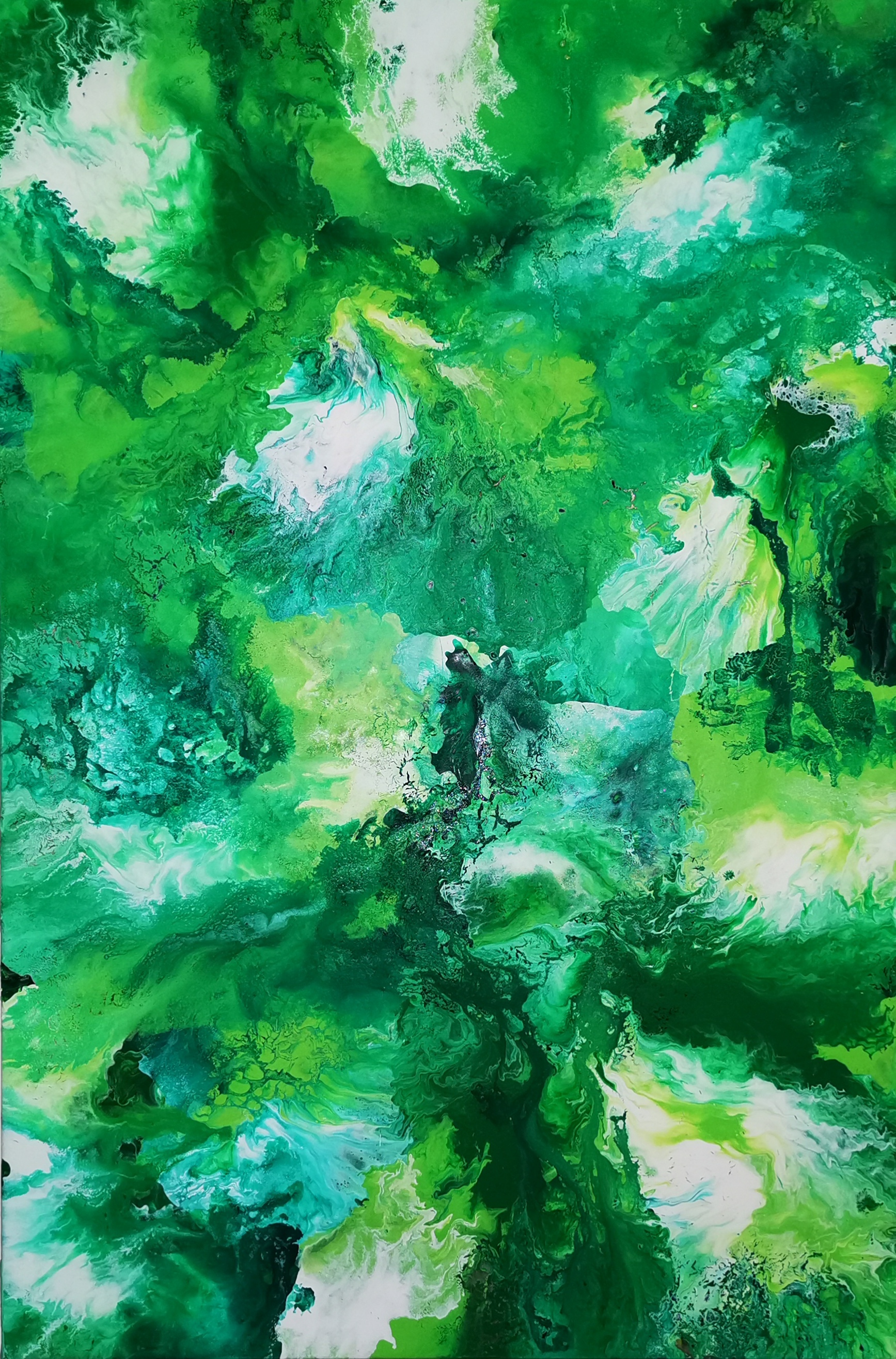
Photo by Maximo Simon Walther
green leafed tree
Photo by veeterzy on Pexels.com
Spring season in europe

As spring begins to bloom in Europe, I find myself feeling inspired by the natural beauty of the forest where I live in Bern, Switzerland. The warmer weather and longer days have brought a renewed sense of energy to the forest, with buds and flowers bursting forth on the trees and the forest floor.

Living directly in the forest in a captial City

Living in such a beautiful natural environment has taught me the importance of protecting and preserving the diversity of our forests. As much as I enjoy exploring the forest and using it for my own recreational activities, I understand the need to maintain a delicate balance between human use and the preservation of the natural environment. In Bern, the city government has taken steps to ensure that the forests remain healthy and diverse. They have implemented measures to limit the impact of human activities such as hiking and biking, and have established protected areas where certain species can thrive undisturbed.

Balance and protecting

But protecting the environment of our city forest is not just the responsibility of the government. It is up to all of us who use the forest to take care of it and preserve its diversity. We can do this by following the rules and guidelines set out by the city, by respecting the natural environment, and by being mindful of our impact on the forest.

As I walk through the forest, taking in the sights and sounds of spring, I am reminded of the importance of preserving this natural environment for future generations to enjoy. By working together to keep the balance between human use and protecting the diversity of the forests, we can ensure that the beauty of our city forest will continue to inspire and enrich our lives for years to come.

Artistic inspiration

Painting a forest in an abstract way can be a great way to capture the essence and energy of nature without being too literal or representational. With an abstract approach, you can focus on the colors, shapes, and textures of the forest and use them to create a unique and expressive artwork.

To begin, you might start by thinking about the mood or feeling you want to convey in your painting. Do you want to capture the energy and vibrancy of a spring forest, or the stillness and tranquility of a winter landscape? Once you have a general idea in mind, you can start experimenting with different colors, textures, and techniques to create a visually interesting and emotionally engaging painting.

One way to approach an abstract forest painting is to layer different colors and textures to create depth and dimension. You might start with a bright and bold color palette, using hues of green, blue, and yellow to represent the vibrant energy of the forest. Then, you could add layers of texture and shape to create a sense of depth and movement. You might use broad, sweeping strokes to represent the branches of trees, or use splatters and drips to evoke the energy of a rushing stream or waterfall.

Another approach might be to use more muted or subdued colors to capture the quiet beauty of a forest in winter. You might use shades of gray, white, and blue to create a sense of stillness and tranquility, and add layers of texture and pattern to create a sense of depth and movement. You might use delicate brushstrokes to represent the frost on the branches of trees, or use light and shadow to create a sense of depth and space.

Ultimately, the key to creating an abstract forest painting is to let your creativity and intuition guide you. Trust your instincts and allow yourself to explore and experiment with different colors, textures, and techniques until you create a painting that truly captures the essence and energy of the forest in a unique and personal way.